Hot weather typically raises tire pressure by about 1 psi for every 10°F the temperature climbs. Check your pressure when the tires are cold, compare the reading to the number on your vehicle’s door jamb placard, and avoid letting air out of hot tires to force them down to that cold spec. If you see a fast leak, a bulge, or a pressure warning paired with odd handling, stop driving and get the vehicle looked at.
TL;DR:
- Tire pressure can increase by approximately 1 psi for every 10°F rise in ambient temperature, which can cause significant fluctuations throughout the day.
- The tire pressure warning light may trigger due to real leaks, sensor issues, or seasonal pressure swings, requiring a manual check for accurate diagnosis.
- Overinflated tires reduce grip and increase impact vulnerability, while underinflated tires heighten heat buildup, wear, and risk of blowouts during hot weather.
- Checking tire pressure should be done on a cold tire, ideally after parking for at least three hours, with a reliable gauge to ensure accurate readings.
- Regular maintenance, including monthly checks and inspecting for damages, prevents heat-related tire problems and prolongs tire life.
Table of Contents
- How heat changes the air inside your tires and what numbers to expect
- Why your tire pressure light (TPMS) may come on in summer and what it actually signals
- Safety risks of incorrect pressure in hot weather (overinflation and underinflation explained)
- How to check and adjust tire pressure the right way during hot weather
- Triage: what to do when a pressure reading looks wrong on a hot day
- Summer maintenance checklist for tire-pressure health
- When to see a pro and what to expect at Kwik Kar
- Kwik Kar perspective: a short, reassuring sign-off from the shop
- Get your tires checked before the next heat wave
- FAQ
- Sources
How heat changes the air inside your tires and what numbers to expect
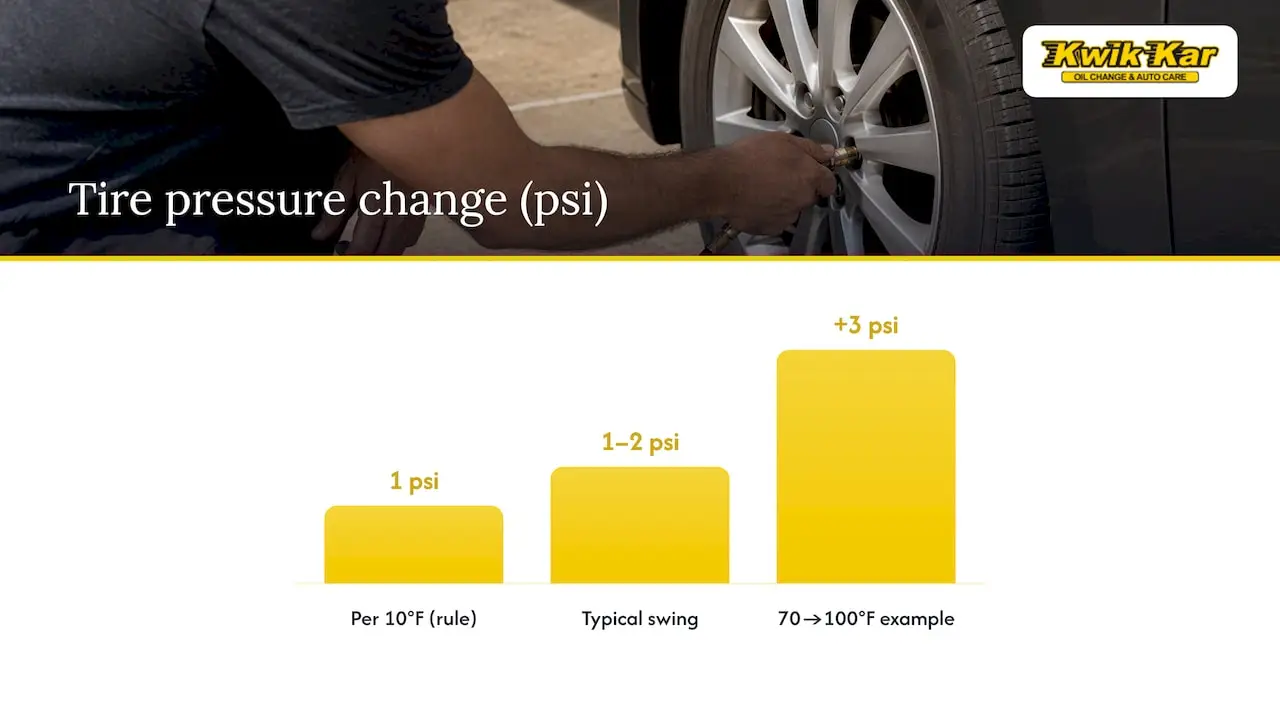
Air expands as it warms. Inside a sealed tire, that expansion shows up as rising pressure on your gauge, even though you haven’t added a single puff of air. The widely used rule of thumb among tire-safety guides is that pressure shifts by roughly 1 psi for every 10°F of ambient temperature change, though the actual swing can run 1 to 2 psi depending on tire size, load, and how much the air inside has already heated up.
There’s a second kind of heat to separate from ambient warming: the heat your tires generate just by rolling. A tire that’s been driven for a while, especially at highway speed, can read several psi higher than the same tire would show first thing in the morning. That’s friction and flexing heat, not just the weather.
A tire’s pressure typically fluctuates by about 1 psi per 10°F of temperature change, according to AAA Club Alliance, which means a wide daily swing can move your numbers more than you’d expect.
Picture a morning that starts at 70°F and climbs to 100°F by mid-afternoon:
- A tire set at 32 psi at 70°F could read closer to 35 psi by the time the asphalt is baking at 100°F.
- Drive that same tire for 20 minutes on the highway and the reading climbs further from rolling friction alone.
- None of that extra air was added. It’s the same air, just warmer and under more pressure.
This is also why tires lose a little pressure every month regardless of season. Rubber is slightly porous, and air seeps out slowly over time, which is part of why a monthly check matters even when the weather holds steady.
Why your tire pressure light (TPMS) may come on in summer and what it actually signals
A tire pressure warning light feels urgent, and sometimes it is, but it’s worth understanding what the system is actually built to do. TPMS is a backup alert, not a maintenance tool. According to Consumer Reports, some TPMS systems only warn after a tire is significantly underinflated, often well past the point where a manual check would have caught the problem.
A few things commonly trigger the light during hot weather:
- A genuine leak that drops pressure below the system’s warning threshold, sometimes worsened by a quick overnight temperature drop.
- A pressure swing that happens to straddle the threshold on a particularly hot or cold day.
- A faulty sensor or low sensor battery, which can trigger false or inconsistent alerts.
When the light comes on, the right move is simple: pull over when it’s safe, check all four tires with a gauge, and compare the readings to your placard spec. If one tire reads noticeably low and keeps dropping over the next few days, that’s a leak worth having checked rather than topped off repeatedly. If the light clears after you correct the pressure and stays off, you likely caught normal seasonal drift in time. If it keeps returning with no obvious pressure problem, the sensor itself may need attention.
Safety risks of incorrect pressure in hot weather (overinflation and underinflation explained)
Running the wrong pressure doesn’t just waste gas. It changes how much rubber touches the road and how the tire handles stress, and heat makes both problems worse.
Overinflated tires ride on a smaller, rounder footprint. Less rubber meets the pavement, which can reduce grip and make the ride feel harsher. That smaller contact patch also makes the tire more rigid and more vulnerable to impact damage from potholes or curbs, since there’s less give to absorb the hit.
Underinflation is the more common and more dangerous problem in summer. A tire running low on air flexes more with every rotation, and that extra flexing generates heat on top of the heat already coming from the pavement and the air temperature. The combination accelerates wear along the tire’s edges and raises the risk of a sudden blowout at highway speed, since heat buildup is one of the mechanisms behind tire deterioration described in tire industry safety guidance. That stress is cumulative. Repeated underinflation over a hot summer wears on the internal structure of the tire well before any damage is visible from outside, according to AAA.
Underinflated tires can reduce fuel economy and cause faster wear, per the U.S. Department of Energy, which means low pressure costs you at the pump as well as in tire life. Keeping pressure close to the placard spec protects handling, mileage, and the tire’s long-term durability all at once.
How to check and adjust tire pressure the right way during hot weather
Getting an accurate reading isn’t complicated, but timing and tools both matter more than most drivers realize.
The gold standard is a cold check: tires that have been parked for at least three hours, or driven less than one mile at moderate speed, as recommended by NHTSA. That’s the only condition where the number on your gauge lines up with the target number on your placard. If you absolutely have to check after driving, know that the reading will run high and shouldn’t be treated as your baseline.
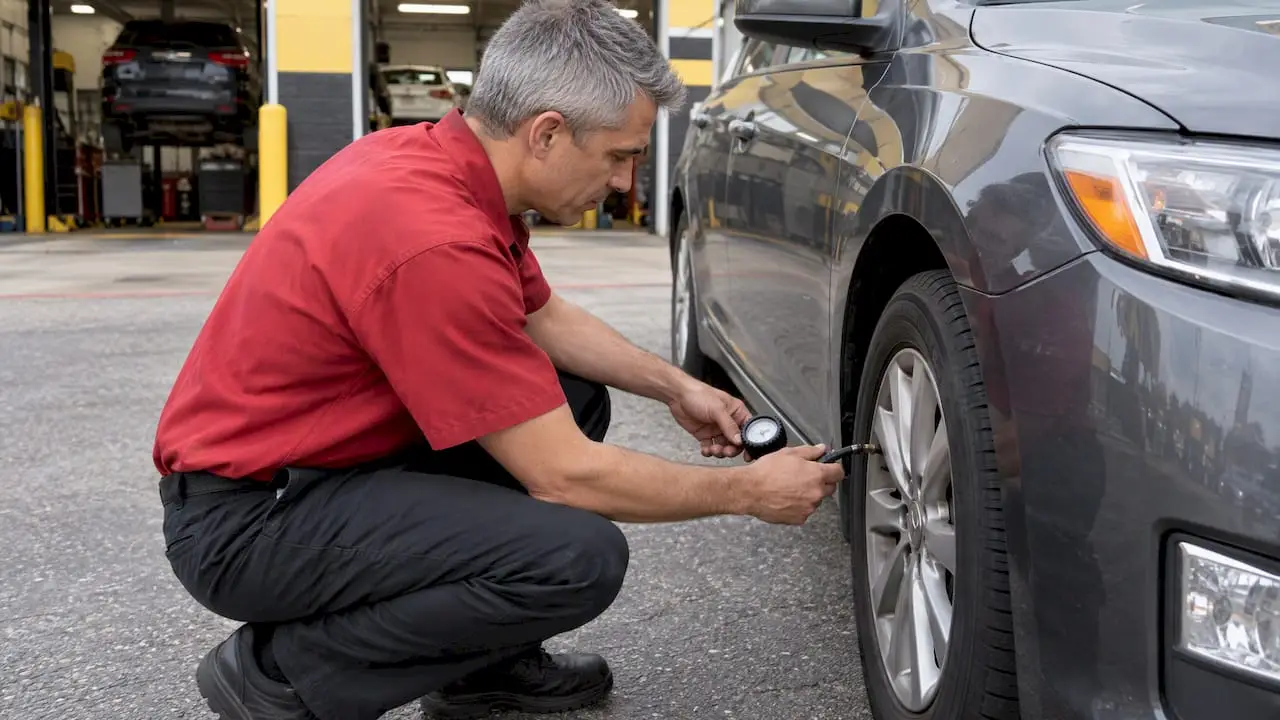
Skip the gas station air pump’s built-in gauge for your actual reading. Those units see heavy use and drift out of calibration easily. A dedicated digital or dial gauge, kept in the glove box, gives a more consistent number every time, and a buyer’s guide to reliable tire gauges can help you pick one that holds calibration.
Here’s the full process:
- Find your target pressure on the placard inside the driver’s door jamb or in the owner’s manual, never the number molded into the tire’s sidewall, which is a maximum rating rather than your vehicle’s recommended setting, a distinction covered in detail in this guide to vehicle-specific inflation specs.
- Remove the valve cap and set it somewhere you won’t lose it.
- Press the gauge firmly onto the valve stem until the hiss stops and you get a steady reading.
- Compare the number to your placard spec for that tire position, front and rear specs sometimes differ.
- Add air in short bursts if you’re under spec, checking again after each addition, or release small amounts with the gauge’s bleed valve if you’re over.
- Replace the valve cap and recheck all four tires, plus the spare, before you consider the job done.
Pro Tip: If you can’t wait for tires to cool, estimate by subtracting 2 to 6 psi from a hot reading before comparing it to your cold-spec target, then confirm with a proper cold check as soon as you can.
Triage: what to do when a pressure reading looks wrong on a hot day
A hot reading that’s a few psi over placard spec isn’t a problem to fix on the spot. Bleeding air from a hot tire to force it down to your cold number will leave you underinflated once things cool off, since you’ve removed air that would have settled back down on its own. Let the tire cool and recheck before adjusting anything.
Some signs point to something more serious than normal thermal swing:
- A tire that’s noticeably softer than the others, or one that keeps losing pressure day after day.
- Visible bulges, cracks, or cuts in the sidewall, any of which can worsen quickly under heat and load.
- A hissing sound near the valve stem or tire bead, which usually means active air loss.
- A TPMS warning that shows up alongside a pull to one side, vibration, or an unusual noise.
If you notice any of these, reduce your speed, avoid long highway stretches, and get to a safe location or a shop rather than pushing on. A tire under stress in summer heat can fail faster than it would in milder weather, and a short drive to get it checked is a far better outcome than a roadside blowout.
Summer maintenance checklist for tire-pressure health
A little routine goes a long way toward avoiding heat-related tire trouble. Build these checks into your month:
- Check all four tires, plus the spare, once a month and before any long trip.
- Recheck after hauling a heavy load or hitting a pothole or curb hard.
- Recheck after a sharp swing between a cold night and a hot afternoon, since those are the conditions most likely to push pressure outside the safe range.
- Inspect tread and sidewalls for cracking or bulging while you’re already at the valve stem.
- Keep a reliable gauge in the car and jot down your readings so you can spot a slow leak early.
| Checklist item | How often | Why it matters |
|---|---|---|
| Check pressure on all tires and spare | Monthly | Catches slow leaks before TPMS would warn you |
| Recheck before long trips | Before departure | Avoids starting a drive underinflated |
| Recheck after heavy loads or impacts | As needed | Impacts and extra weight can cause sudden pressure loss |
| Visual check for cracks or bulges | Monthly | Spots sidewall damage that worsens with heat |
Our road trip inspection guide walks through a fuller pre-trip checklist if you’re planning a longer summer drive.
When to see a pro and what to expect at Kwik Kar
Some situations are worth handing to a technician rather than working through at home. If a tire keeps losing pressure despite repeated top-offs, if you spot a bulge or sidewall crack, if the TPMS light keeps returning without a clear cause, or if you suspect a sensor fault, it’s time for a shop visit rather than another round of guesswork.
A tire-pressure concern typically starts with a visual inspection of the tire, the valve stem, and the wheel bead, followed by a check for slow leaks at the valve core and around the rim.
Digital Vehicle Inspections include photos and videos of what was found, sent straight to your phone, along with notes explaining recommendations and why, so you can see the leak, the crack, or the worn tread yourself before deciding how to proceed. If a nail or puncture turns out to be the culprit, our breakdown of when a tire can be safely repaired versus replaced covers what to expect next.
Bring your vehicle’s recent pressure history if you have it. Knowing whether a tire has been slowly dropping for weeks or lost air suddenly helps us narrow down the cause faster.
Kwik Kar perspective: a short, reassuring sign-off from the shop
Most of what drivers notice on a hot gauge reading is completely normal. A tire that reads a few psi higher on a 100 degree afternoon than it did at sunrise isn’t failing. It’s just doing what air does when it warms up.
What actually matters is catching the small, slow problems before summer heat turns them into bigger ones. A monthly check with a decent gauge, and a willingness to get a tire looked at when something seems off, prevents the vast majority of heat-related tire trouble we see. If you’re ever unsure, bring it in and let us take a look with our Digital Vehicle Inspection so you can see exactly what’s going on.
— Kwik Kar
Get your tires checked before the next heat wave
A quick pressure and inspection check takes just a few minutes but can save you a roadside breakdown or a premature tire replacement later in the season. If you’re heading out on a summer road trip, prepping a fleet vehicle, or just want peace of mind before the next heat spike, our team can check pressure on all four tires and the spare, look for slow leaks at the valve and bead, and send you photos and videos through our Digital Vehicle Inspection so you know exactly where things stand.
Technicians handle everything from a simple valve core swap to diagnosing a persistent leak, and you’ll get a clear recommendation either way, no surprises. Visit our general service page to see the full range of inspection and repair services available, or stop by before your next long drive so a small issue doesn’t turn into a bigger one at highway speed.
FAQ
What should my tire pressure be in hot weather?
Your target pressure doesn’t change for hot weather. It’s whatever number is listed on your vehicle’s door jamb placard or owner’s manual, checked while the tires are cold. The reading may run a little higher on a hot afternoon, but the cold-spec target stays the same year round.
Is it normal for tire pressure to go up in heat?
Yes. Pressure typically rises by about 1 psi for every 10°F the ambient temperature increases, since warm air expands inside the sealed tire. This is a normal physical response and isn’t a sign of a problem on its own.
At what temperature do tires lose air pressure?
Tires lose pressure as temperatures drop, following the same roughly 1 psi per 10°F relationship in reverse, so a cold snap after a hot stretch can push a tire below its target. Tires also seep a small amount of air naturally every month regardless of temperature, which is why NHTSA recommends checking them monthly.
What is the 4 PSI rule on tires?
There isn’t an official “4 psi rule” from major tire-safety authorities. What’s widely used instead is the roughly 1 psi per 10°F guideline for temperature-related swings, along with the general caution that hot tires can read several psi higher than their cold baseline.
Sources
- How temperature changes affect your tire pressure | AAA Club Alliance
- Tire safety and care guidance | NHTSA
- Tire safety checklist | Consumer Reports