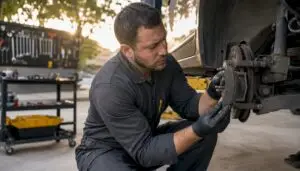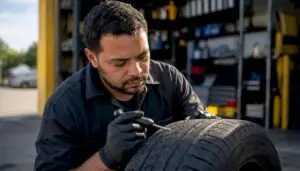
Replacing brake rotors typically runs $250 to $500 per axle when pads and rotors go together, or $500 to $1,000 for a full front-and-rear job, according to AAA. Performance, luxury, or specialty rotors push costs higher, and the final number depends heavily on your specific vehicle, the rotor type installed, and whether calipers or sensors need attention. The most reliable way to know what you’ll actually pay is a proper inspection, so you get an itemized quote instead of a guess.
TL;DR:
- A typical axle job takes one to three labor hours; rusted hardware, larger rotors, sticking calipers, or ADAS recalibration can raise the bill.
- Replace pads with rotors when they are worn, since old pads can wear new rotors unevenly; fresh hardware also helps prevent noise.
- Most modern rotors are too thin for safe machining, so ask the shop to check thickness before recommending replacement.
- Have technicians measure rotor thickness and runout, inspect caliper movement, and document findings; visible readings and itemized pricing make quotes easier to compare.
- For most daily drivers, quality aftermarket rotors deliver comparable performance and longevity at lower prices; luxury and performance vehicles may warrant OEM parts.
Table of Contents
- How Parts and Labor Add Up on a Rotor Replacement Quote
- Quick Reference: Realistic Price Bands for Common Scenarios
- Why Your Quote Might Differ From the Average
- What a Proper Inspection Checks, and What to Ask for a Reliable Quote
- Why Our Digital Vehicle Inspections Make Rotor Quotes More Reliable
- Warranty and Quality Differences Between Rotor Types
- OEM vs. Aftermarket Rotors: Comparing the Real Cost Difference
- Extra Costs That Can Show Up on a Rotor Replacement Invoice
- How Shop Type Changes What You Pay
- Why Prices Vary by Region and How to Compare Quotes Fairly
- What Most Rotor Cost Advice Gets Wrong
- Get a Vehicle-Specific Brake Quote Backed by Real Measurements
- FAQ
- Sources
How Parts and Labor Add Up on a Rotor Replacement Quote
A rotor replacement estimate is really two separate costs stacked together: parts and labor. Understanding each line lets you compare quotes from different shops without getting lost in jargon.
On the parts side, rotor prices vary widely by grade and design. Economy rotors sit at the low end, standard OEM-equivalent rotors cost more, and premium coated or performance rotors cost the most per unit. Pads usually get replaced at the same time, since old, worn pads on new rotors wear unevenly and can shorten rotor life. Hardware kits (the small clips and shims that keep pads seated correctly) add a modest amount but matter for a quiet, even-wearing brake job.
Labor is the other half of the equation. A typical rotor and pad job takes roughly one to three hours per axle, depending on how easily the caliper bolts and slide pins release and whether rust or corrosion has frozen any hardware in place. Shop labor rates differ by region and business type, so the same number of hours can produce different totals from one shop to the next.
Machining, or resurfacing, an existing rotor used to be common, but most rotors manufactured today are too thin to machine safely and still meet minimum thickness specs. When machining is still an option, it costs less than a new rotor, but a shop should only offer it when the rotor’s remaining thickness clearly supports it.
- Rotors: price varies by grade, from economy to OEM to premium coated designs.
- Pads and hardware: typically replaced alongside rotors for even wear and quiet operation.
- Labor: generally one to three hours per axle, depending on hardware condition.
- Machining: sometimes available on thicker rotors, priced below full replacement.
Quick Reference: Realistic Price Bands for Common Scenarios
Numbers help more than ranges alone, so here’s how the math typically breaks down for different jobs.
Per axle, pad and rotor replacement commonly falls between $250 and $500, according to AAA. Pads alone, without rotors, usually run lower, in the $150 to $350 range per axle according to the same AAA guidance. Some estimates place a full-service job involving pads, rotors, and calipers between $1,000 and $1,500 total, as noted in an AAA blog post.
Applying those bands to real scenarios:
- Front axle only: roughly $250 to $500 for pads and rotors together.
- Front and rear axles: roughly $500 to $1,000 for the full vehicle.
- Full-service jobs with calipers or hardware replacement: can reach $1,000 to $1,500.
- Luxury, performance, or large SUV applications: often exceed these ranges because of larger rotor diameters and specialty materials.
These bands assume a standard sedan or crossover with no seized hardware, no caliper damage, and no sensor recalibration needed. Add any of those complications and the total climbs.
Why Your Quote Might Differ From the Average
Two vehicles with the same symptom can land on very different invoices, and the reason almost always traces back to a handful of variables.
Vehicle class matters first. A compact sedan uses smaller, lighter rotors than a full-size SUV or truck, and larger rotors cost more to produce and install. Luxury brands frequently spec larger rotors with tighter tolerances, which raises both the parts price and the labor time needed to get everything within spec.
Rotor design plays a role too. Vented rotors, which have internal cooling channels, cost more than solid rotors. Drilled or slotted rotors, often chosen for performance or heavy-braking use, cost more still, and coated rotors (designed to resist rust) sit at a premium versus bare cast iron. OEM rotors generally cost more than quality aftermarket equivalents, though the performance gap between the two has narrowed for most daily-driving use.
Associated parts can turn a simple rotor swap into a bigger job. If a caliper is sticking, leaking, or damaged, it needs replacement alongside the rotor. Vehicles with electronic parking brakes or advanced driver assistance systems sometimes require recalibration after brake service, which adds sublet labor and time.
- Vehicle class and rotor size: larger, heavier vehicles need larger, pricier rotors.
- Rotor design: vented, drilled, slotted, and coated rotors each carry a different price point.
- Associated repairs: sticking calipers, worn hardware, or ADAS recalibration add cost.
- Mileage and driving habits: seized bolts or corroded components from high mileage add labor time.
What a Proper Inspection Checks, and What to Ask for a Reliable Quote
A trustworthy rotor quote starts with measurements, not guesses. Technicians typically run through a short sequence to confirm what actually needs replacing.
- Pad thickness measurement determines how much friction material remains and whether pads alone will get you through, or whether rotors are also due.
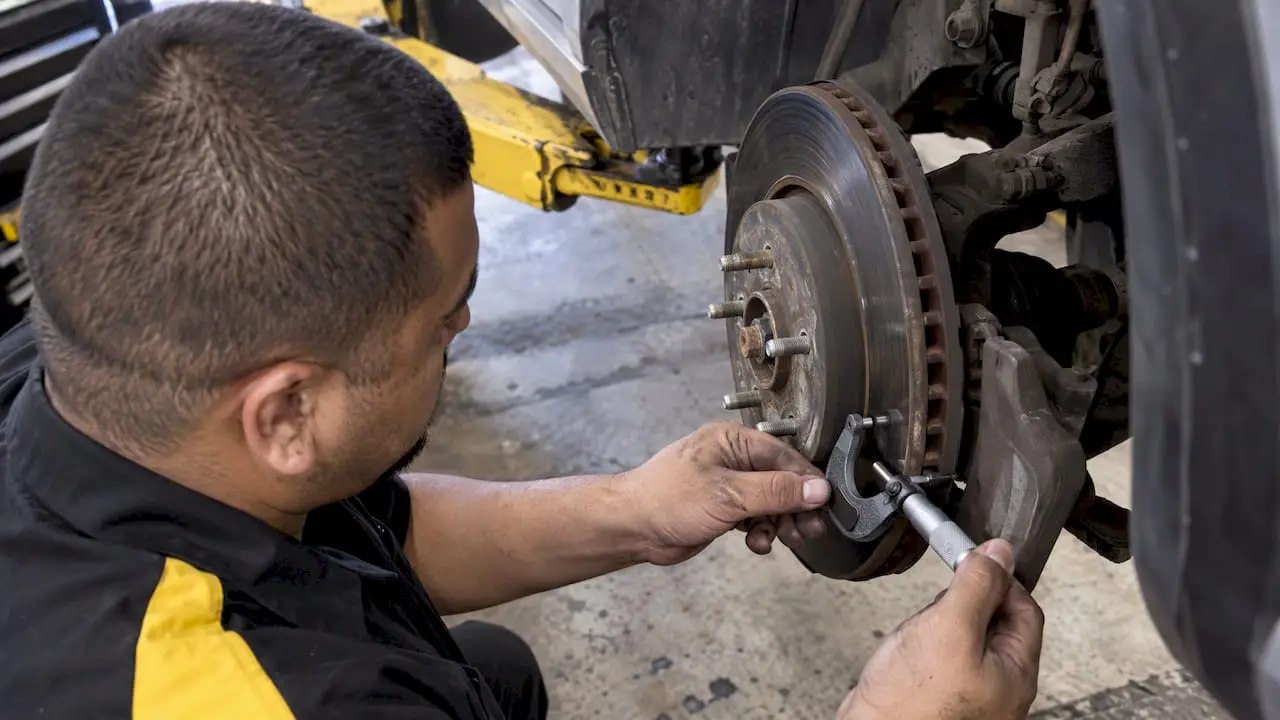
- Rotor thickness check with a micrometer compares the rotor against the manufacturer’s minimum safe thickness, a practice outlined in ASE technician guidance and tied to standards referenced in NHTSA’s vehicle-in-use inspection criteria.
- Runout check with a dial indicator detects warping or uneven wear that causes pedal pulsation, even when thickness looks fine.
- Caliper slide inspection confirms the caliper moves freely, since a sticking caliper wears pads and rotors unevenly and will undo a fresh rotor job quickly.
When you get a quote, ask for the labor rate, the rotor and pad brand being used, the warranty length, whether pricing is itemized per axle, and whether machining was considered before replacement was recommended. Ask about timeline too: most jobs finish same-day, but ADAS-equipped vehicles may need extra time for recalibration.
Pro Tip: Ask for photos of your actual rotor thickness reading, not just a verbal “they’re worn.” A number you can see is a number you can trust.
Why Our Digital Vehicle Inspections Make Rotor Quotes More Reliable
Digital Vehicle Inspections (DVIs) on brake evaluations can provide photos, video, and technician notes so you can see your actual rotor thickness and wear pattern rather than taking a verbal estimate on faith. Our ASE-certified technicians follow the same measurement practices referenced in ASE’s maintenance and light repair standards, using a micrometer and dial indicator before recommending replacement over machining.
- Digital Vehicle Inspections show your rotor measurements and wear in photos and video, not just a technician’s description.
- ASE-certified technicians apply the same thickness and runout checks referenced in national technician standards.
- Itemized estimates separate parts and labor so you can see exactly what you’re paying for.
If you want more detail on when pads alone are enough versus when rotors are due, our brake pad replacement guide breaks down the signs, and our brakes service page covers warranty details.
Warranty and Quality Differences Between Rotor Types
Not every rotor carries the same backing, and the warranty attached to a rotor often says as much about its expected lifespan as the price tag does. Economy rotors sometimes carry limited or no warranty, reflecting thinner castings and less rigorous quality control. Standard OEM-equivalent rotors typically carry a modest parts warranty, while premium coated or performance rotors often come with longer coverage, since the coating is designed specifically to resist the rust and corrosion that shorten rotor life in daily driving.
Quality differences show up in a few concrete ways beyond the sticker price. Casting consistency affects how evenly a rotor wears and how resistant it is to warping under heavy braking. Coating quality determines how long a rotor resists surface rust, which matters most for vehicles that sit outside or see frequent short trips. Balance and tolerance during manufacturing affect whether you feel a pulsation in the pedal months after installation.
A rotor and pad combination installed as a set, with hardware replaced at the same time, tends to wear more evenly than mixing a new rotor with old pads or reused hardware clips. That consistency is part of why many shops treat a repair warranty as tied to the full job (parts and labor together) rather than the rotor alone.
OEM vs. Aftermarket Rotors: Comparing the Real Cost Difference
OEM rotors, sourced from or matched to your vehicle manufacturer’s specifications, typically cost more per rotor than quality aftermarket alternatives. The price gap exists because OEM parts carry manufacturer branding, tighter production tolerances, and often a supply chain built around dealership parts counters.
Aftermarket rotors span a wide quality range. At the lower end, budget aftermarket rotors cut costs through thinner castings or less precise balancing, and the savings can come with a tradeoff in noise, vibration, or shorter service life. At the upper end, premium aftermarket rotors from established manufacturers often match OEM performance closely, sometimes adding features like extra coating or improved cooling vents that the original equipment did not include, at a price still below OEM.
For most daily-driving vehicles, a quality aftermarket rotor delivers comparable stopping performance and longevity to OEM at a lower price point. The decision matters more for high-performance or luxury vehicles, where OEM rotors are engineered to tighter tolerances for that specific vehicle’s weight and braking demands. Asking your shop which tier of aftermarket part they stock, and why, is a reasonable question before approving any quote.
Extra Costs That Can Show Up on a Rotor Replacement Invoice
A rotor quote that looks straightforward on paper sometimes grows once a technician gets hands-on with the vehicle. A few additions are common enough to ask about upfront.
Hardware kits, the small clips, shims, and anti-rattle springs that keep pads seated correctly, add a modest line item but matter for a quiet, even-wearing brake job. Skipping them to save a few dollars often leads to squeaking or uneven pad wear later.
Brake fluid service sometimes gets recommended alongside rotor work, particularly if the fluid is old or the system needs to be bled after caliper work. This isn’t always necessary for a straightforward rotor swap, but it becomes relevant if a caliper was opened or if the fluid hasn’t been changed in several years.
Resurfacing, when a rotor is thick enough to machine instead of replace, costs less than a new rotor but isn’t always offered, since most modern rotors are manufactured thinner to save weight and often fall below the safe machining threshold on a first inspection.
Caliper replacement, seized slide pins, or ADAS recalibration can each add their own labor and parts cost if discovered during inspection. None of these are guaranteed on every job, which is exactly why an itemized, photo-backed estimate matters more than a flat quoted number.
How Shop Type Changes What You Pay
Where you take your vehicle for rotor replacement affects the final bill almost as much as the parts themselves. Dealerships generally charge the highest labor rates, reflecting brand-specific training and OEM-only parts sourcing, though they offer familiarity with your exact make and model’s specifications.
Independent shops typically charge lower labor rates than dealerships while still employing trained technicians, and many stock both OEM and aftermarket parts, giving you a choice in how the quote breaks down. Regional or national chains often sit between the two, with standardized pricing across locations and frequent promotional offers on brake service.
None of these categories guarantees better or worse work on its own. What matters more is whether the shop performs real measurements (rotor thickness, runout, caliper condition) before quoting, and whether it backs the job with a clear warranty. A shop that shows you the numbers, rather than a flat estimate based on mileage alone, tends to deliver a more accurate price regardless of its business type.
Why Prices Vary by Region and How to Compare Quotes Fairly
Labor rates and parts pricing shift from one metro area to another, driven by local cost of living, shop overhead, and competition density. A rotor job quoted in one region can differ noticeably from the same job quoted elsewhere, even with identical parts.
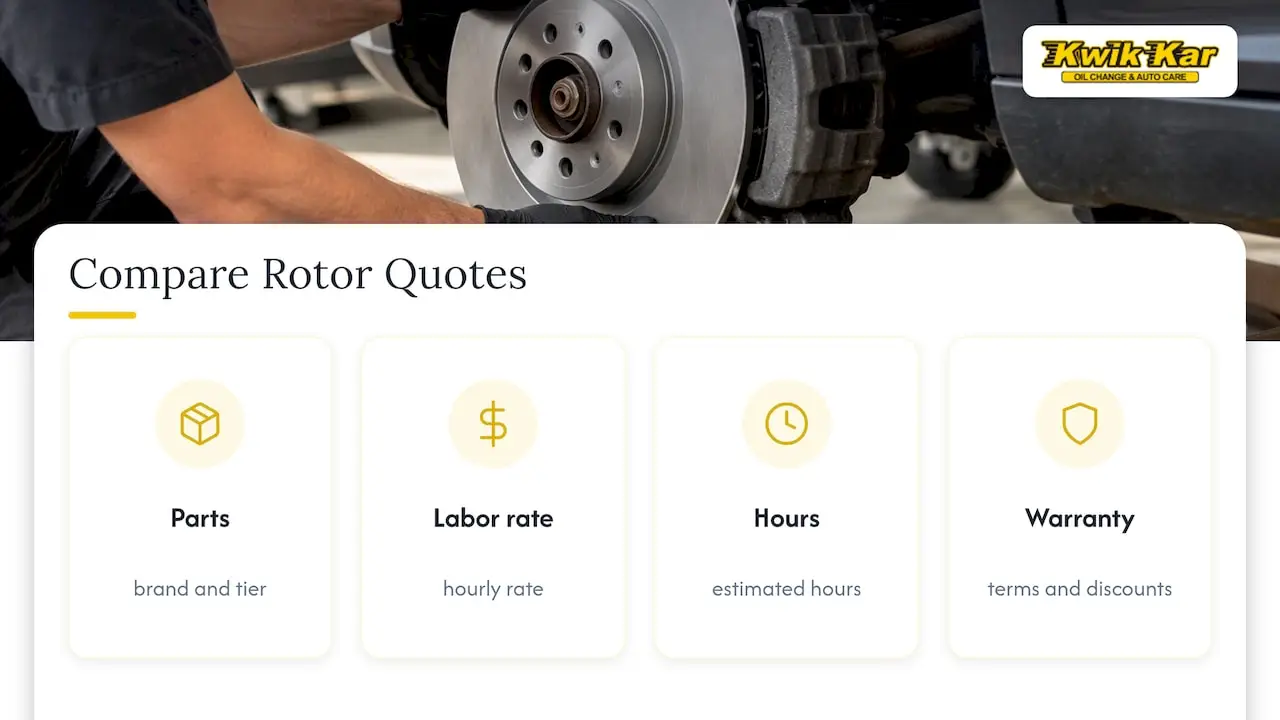
Getting a fair comparison starts with asking every shop for the same breakdown: parts brand and tier, labor rate, estimated hours, and warranty terms. A quote that lumps everything into one number is harder to evaluate than one that separates rotor cost, pad cost, hardware, and labor line by line.
AAA’s repair cost estimate tool gives a useful baseline for comparing a local quote against typical ranges, and AAA Approved Auto Repair shops often carry member discounts and warranty coverage worth asking about. For drivers researching costs in markets where mobile repair is common, mobile brake repair pricing in the Nashville area illustrates how on-site labor and VIN-based quoting can shift the math compared to a traditional shop visit. Whichever route you take, the goal is the same: an itemized, vehicle-specific number you can check against a real standard.
What Most Rotor Cost Advice Gets Wrong
Most online cost guides treat rotor replacement like a fixed menu price, and that framing does readers a disservice. The honest answer is that a rotor quote is only as good as the measurements behind it. A shop that hands you a number without checking rotor thickness, runout, and caliper condition is guessing, even if the guess happens to land in a reasonable range.
The bigger issue readers underestimate is how much deferred pad replacement drives up rotor costs later. Letting pads wear down to metal scores the rotor surface, turning a modest pad job into a mandatory rotor replacement, a pattern AAA specifically flags as a common cause of higher repair bills.
If there’s one thing to prioritize, it’s asking for the actual numbers: rotor thickness in millimeters, runout in thousandths of an inch, and a written labor estimate before work starts. A price range is a starting point. A measurement is the thing that should actually decide what you pay.
— Kwik Kar
Get a Vehicle-Specific Brake Quote Backed by Real Measurements
A rotor replacement quote is only useful when it’s built on your vehicle’s actual measurements, not a regional average. Technicians check rotor thickness, runout, and caliper condition before recommending replacement, then findings can be sent via Digital Vehicle Inspection so you can see exactly what’s worn and why.
- Schedule an inspection: our ASE-certified technicians measure your rotors and pads before quoting anything.
- Receive a DVI: photos, video, and notes arrive on your phone so you can review the findings yourself.
- Get an itemized quote: parts and labor broken out separately, with warranty terms included.
Right now, you can save with our $20 off brake replacement coupon, and same-day service is often available for Irving drivers who need brake work done without losing a vehicle for days. Visit our brake repair service page to book an inspection and get a quote built on your car’s actual numbers.
FAQ
Can you drive a car with bad rotors?
Driving on badly worn or warped rotors is unsafe because stopping distance increases and the pedal can pulsate or feel less responsive under hard braking. If you notice grinding, pulsation, or a burning smell, have the rotors inspected before continuing to drive the vehicle regularly.
What are signs of bad brake rotors?
Common signs include a pulsating brake pedal, visible grooves or scoring on the rotor surface, a grinding or squealing noise, and longer stopping distances. Our brakes squeaking guide covers how to tell rotor wear apart from pad noise.
What is the lifespan of brake rotors?
Rotor lifespan depends heavily on driving habits, climate, and rotor quality, with aggressive stop-and-go driving and corrosive, salty conditions shortening it faster than highway-heavy driving. A technician can check your remaining thickness against the manufacturer’s minimum spec to tell you how much life is left.
How much are brakes and rotors for all 4?
Replacing pads and rotors on all four wheels typically falls in the $500 to $1,000 range, based on the per-axle pricing of $250 to $500 reported by AAA. The exact total depends on your vehicle’s rotor size, rotor type, and whether any additional parts like calipers need replacement.
Sources
- How Much Does It Cost To Replace Brake Pads? | AAA Automotive
- Automobile Maintenance and Light Repair (G1) Test — ASE
- 9252 | NHTSA